

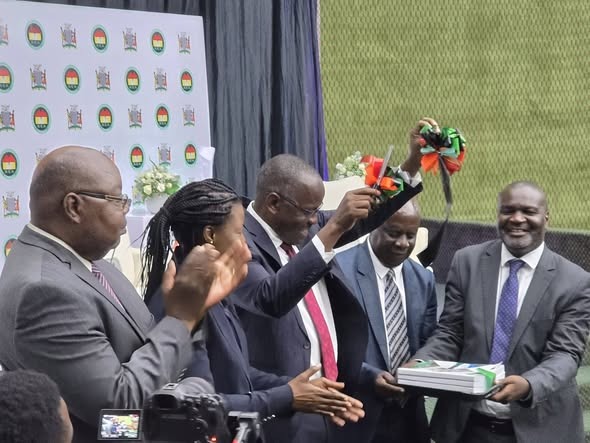
Government has unveiled the updated Rural Electrification Master Plan (REMP) for the period 2025–2030, setting an ambitious target of achieving universal access to electricity across rural Zambia by the end of the decade.
Zambia will require an estimated investment of about US$1.52 billion between 2025 and 2030, to achieve universal electricity access.
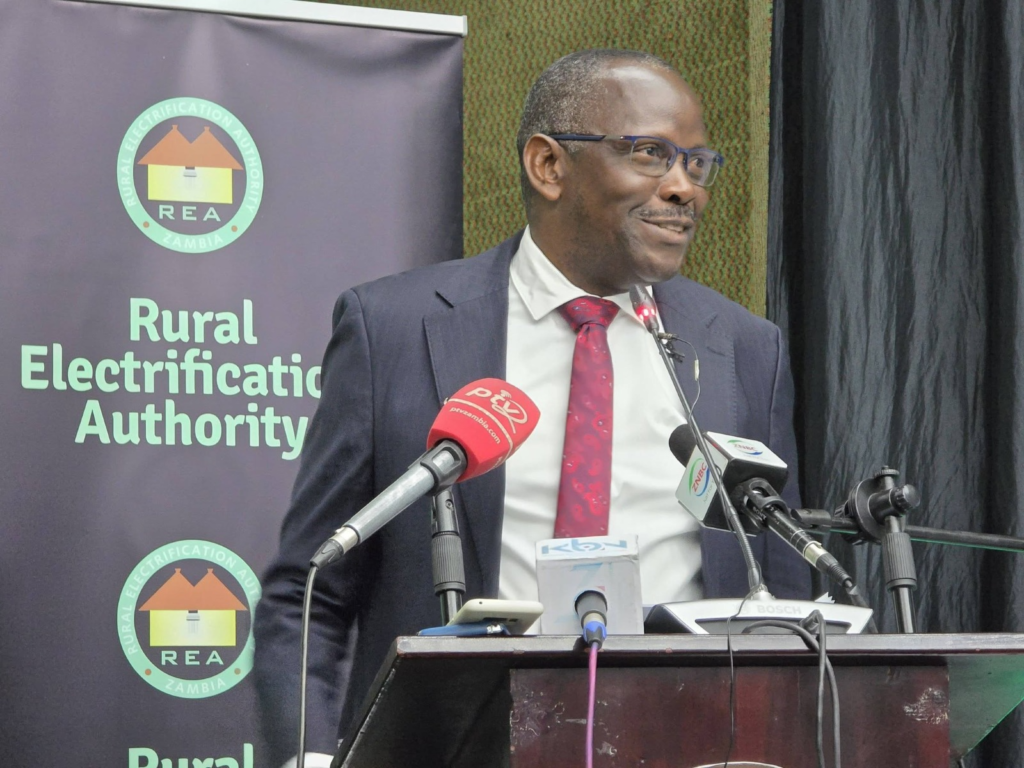
Speaking during the launch in Lusaka, Minister of Energy, Makozo Chikote, said the plan is central to government’s broader development agenda and commitment to ensuring that all Zambians have access to affordable, reliable, and modern energy by 2030.
Mr. Chikote emphasized that expanding electricity access goes beyond infrastructure development and is key to unlocking economic opportunities and improving livelihoods.
“Expanding access to electricity is not merely about infrastructure, it is about unlocking economic potential, improving livelihoods, and accelerating Zambia’s transition to a prosperous middle-income economy under Vision 2030,” he added.
Mr. Chikote noted that the updated plan responds to changing dynamics in the country, including population growth, shifting administrative boundaries, and increased economic activity in rural areas.
“The REMP has since 2008 provided a structured framework for expanding electricity access across rural zambia by laying a strong foundation. however, the Zambia we are planning for today is significantly different. We have seen changes in administrative boundaries, population shifts, and increased economic activity in rural areas all of which have raised the demand for electricity,” Mr. Chikote said.
He further highlighted that the revised plan raises the electrification target from 51 percent rural access to universal access by 2030, in line with Sustainable Development Goal 7.
The Minister added that the plan is grounded in data and informed by least-cost geospatial planning, enabling the government to deploy grid extension, mini-grids, and stand-alone systems based on what is technically and economically optimal.
He noted that the implementation of the plan will have far-reaching socio-economic benefits, including support for agriculture, small enterprises, and job creation.
Mr. Chikote reaffirmed government’s commitment to creating a conducive environment for private sector participation in the energy sector.
He called on cooperating partners and investors to align their efforts with government priorities to ensure coordinated and impactful electrification.
“I urge all cooperating partners, private sector investors, and developers to work in close coordination with my Ministry and the Rural Electrification Authority and align your investment plans so that we deliver efficient and inclusive electricity access,” he said.
