

Zambia has reaffirmed its commitment to sustainable fisheries management and the responsible utilization of aquatic resources during a high-level dialogue on the World Trade Organization (WTO) Agreement on Fisheries Subsidies held in Mombasa, Kenya.
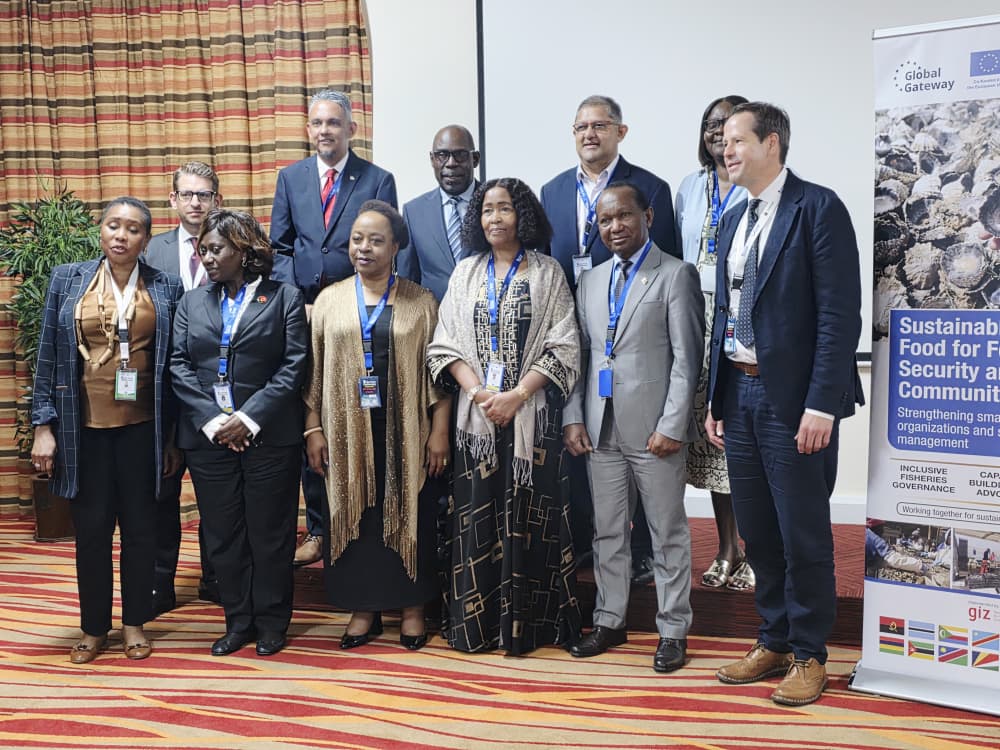
The High-Level Dinner Dialogue, which took place on the margins of the Eleventh Our Ocean Conference, brought together ministers, senior government officials, WTO representatives, development partners, regional organizations and private sector stakeholders from across the Southern African Development Community (SADC) region.
Zambia was represented by Ministry of Fisheries and Livestock Permanent Secretary Dr. Max Choombe, who highlighted the country’s progress in ratifying and implementing the WTO Agreement on Fisheries Subsidies.
Speaking during the dialogue, Dr. Choombe reaffirmed Zambia’s commitment to implementing the WTO Agreement on Fisheries Subsidies, noting that the country deposited its Instrument of Acceptance in July 2025.
“Zambia remains committed to implementing the WTO Agreement on Fisheries Subsidies as part of the global effort to safeguard fisheries resources and promote sustainable fisheries governance,” Dr. Choombe said.
He noted that implementation of the Agreement is aligned with Zambia’s Vision 2030, the Eighth National Development Plan (8NDP), the Fisheries Act No. 22 of 2011 and the National Fisheries and Aquaculture Policy.
Dr. Choombe said the Agreement supports Zambia’s objectives of enhancing food security, creating employment opportunities, expanding trade and promoting environmental sustainability.
He further outlined the country’s priorities in the fisheries and aquaculture sector, including strengthening sustainable fisheries resource management in major water bodies such as Lakes Tanganyika, Mweru, Bangweulu and Kariba, combating illegal fishing through enhanced surveillance and enforcement, and promoting aquaculture development to increase fish production and reduce pressure on capture fisheries.
Other priorities include improving household food and nutrition security and leveraging regional trade opportunities under SADC, the Common Market for Eastern and Southern Africa (COMESA) and the African Continental Free Trade Area (AfCFTA).
The dialogue also recognized the establishment of the WTO Fisheries Funding Mechanism, commonly known as the Fish Fund, which provides technical and financial support to developing countries and Least Developed Countries (LDCs) implementing obligations under the Agreement.
As a country that has ratified the Agreement, Zambia is eligible to access support through the Fish Fund to strengthen fisheries governance and management systems.
According to Dr. Choombe, the fund presents a significant opportunity for Zambia to modernize fisheries monitoring systems, improve fish stock assessment programmes, strengthen fisheries statistics and digital data management, enhance community-based fisheries management and support cross-border fisheries cooperation.
‘The Fish Fund presents a significant opportunity for Zambia to modernize fisheries monitoring systems, strengthen fisheries governance and accelerate sustainable aquaculture development and value chain growth,” he added.
He reiterated Zambia’s commitment to collaborating with regional and international partners to combat IUU fishing, strengthen fisheries governance and improve the livelihoods of fishing communities.
“In Zambia, fisheries and aquaculture remain vital contributors to food and nutrition security, employment creation, income generation and economic diversification,” Dr. Choombe said. “The country continues to prioritize sustainable management of its inland fisheries resources while promoting aquaculture as one of the fastest-growing agricultural subsectors and a key driver of economic transformation.”
The meeting underscored the critical role of fisheries and aquaculture in supporting food security, employment creation, trade, poverty reduction and sustainable economic development. Participants also expressed concern over the growing impact of harmful fisheries subsidies, which contribute to overfishing, depletion of fish stocks and Illegal, Unreported and Unregulated (IUU) fishing.
