

Sino Metals Leach Zambia has reaffirmed its commitment to environmental remediation following the February 18, 2025 incident, and has commenced a comprehensive clean-up, remediation, and restoration programme for affected areas.
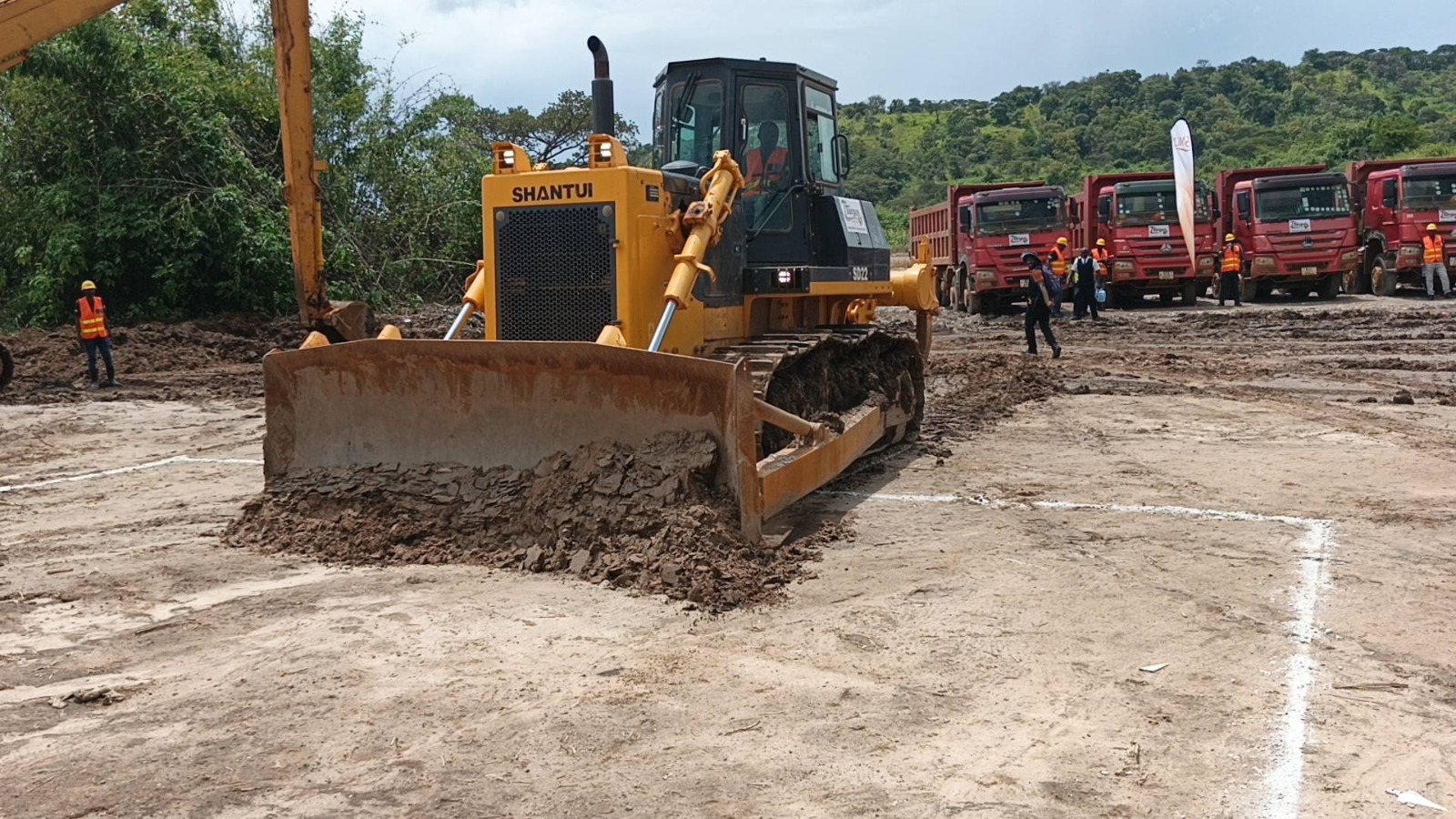
The company has engaged local firm Targus Limited and China Nonferrous Metals Guilin Mineral Resources & Geology Research Institute Co. Ltd to implement the exercise, with priority placed on the Chambishi Stream, Mwambashi River, and Kafue River—key water sources supporting households, agriculture, industry, and wildlife.
The programme encompasses pH correction and continuous water quality monitoring, safe removal or capping of contaminated sediments, soil rehabilitation to restore agricultural productivity, and aquatic ecosystem recovery, including habitat restoration and eventual fish restocking. It also provides for ongoing environmental monitoring to ensure accountability.
Officiating at the launch, Minister of Water Development and Sanitation Collins Nzovu called for enhanced transparency, rigorous scientific monitoring, and inclusive stakeholder participation, emphasizing that the initiative is aimed at safeguarding the welfare of Zambians.
Eng. Nzovu emphasized that the process must succeed and be guided by evidence-based research, directing regulatory bodies, including Zambia Environmental Management Agency (ZEMA) and Water Resources Management Authority (WARMA), to strengthen monitoring efforts and ensure strict compliance with environmental standards.
“It is not about Sino Metals, it is about the people of Zambia, therefore, this exercise should succeed. To everyone else, If you notice gaps, raise it. Monitoring is for everyone including NGOs. ZEMA & WARMA should ensure strict monitoring of the exercise,” Eng. Nzovu said.
He commended the engagement of Targus as a local contractor, urging the firm to demonstrate competence and reinforce confidence in the capacity of Zambian companies to deliver on complex environmental remediation tasks. “I am proud of Targus as a local company contracted, so it should prove itself competent and show that local companies are equal to the task,” he said.
The Minister also called for the publication of quarterly reports to enhance accountability and transparency, while encouraging critics and independent stakeholders to contribute data and insights where discrepancies arise.
And Sino Metals Chairman Wang Jingjun, assured that the clean-up programme will be guided by scientific evidence and strict regulatory oversight. “Since the incident of 18th February last year, we have demonstrated our commitment and dedication to ensuring that we remedy the situation by adhering strictly to all directives and guidelines from the Government of the Republic of Zambia through various regulatory institutions,” Mr. Jingjun stated.
He added that the launch reinforces the company’s resolve to complete the remediation process. “This event we are hosting today reinforces our commitment and resolve to assure all stakeholders that we will complete the journey to restoration and remediation of this environment,” he stressed.
Mr. Jingjun noted that preliminary works have already been undertaken in line with restoration orders issued by regulators, and that these include construction of catch drains and silt traps, stabilization and partial decommissioning of Tailings Dam 15, liming of affected areas, and desludging of Chambishi Stream.
He further outlined measures taken to mitigate the social impact of the incident, including compensation to affected farmers and continued provision of safe drinking water. “All these mentioned activities have been undertaken with strong and close oversight from the Government through the Ministry of Green Economy and Environment, ZEMA, and other regulatory institutions,” Mr. Jingjun said.
“The cleanup we are launching today will be guided by recommendations from the assessment report which was produced by an independent assessor contracted by the Government. The recommendations of that assessment report now form the scientific and regulatory foundation for the remediation programme that we are launching today.”
Mr. Jingjun further said implementation will involve collaboration with multiple government agencies, including WARMA to strengthen water quality monitoring, as well as the Ministry of Fisheries and Livestock and the Ministry of Agriculture for ecosystem and soil restoration.
He also highlighted compliance with local content requirements, noting that selection of a local clean up company is testimony of Sino Mteals’ support and adherence to the local content law which seeks to empower local enterprises.
Meanwhile, Targus Executive Director, Montgomery Mulengeshi, explained that the clean-up will be implemented in phases, beginning with soil neutralization and removal of contaminated sediments, before progressing to ecological restoration and eventual fish restocking.
“If we were to restock the Mwambashi River with fish today,those fish would not survive. The process will only proceed once water quality meets required standards,” he said. “For the farming communities along this corridor, we are introducing a paradigm of simultaneous production and remediation. This means farmers do not have to abandon their fields while we clean the soil.”
Mr. Mulengeshi, assured stakeholders that Targus will execute the project with the highest degree of professionalism, transparency, and in full compliance with the Environmental Management Act, while committing to work closely with Government institutions and affected communities throughout the restoration process.
