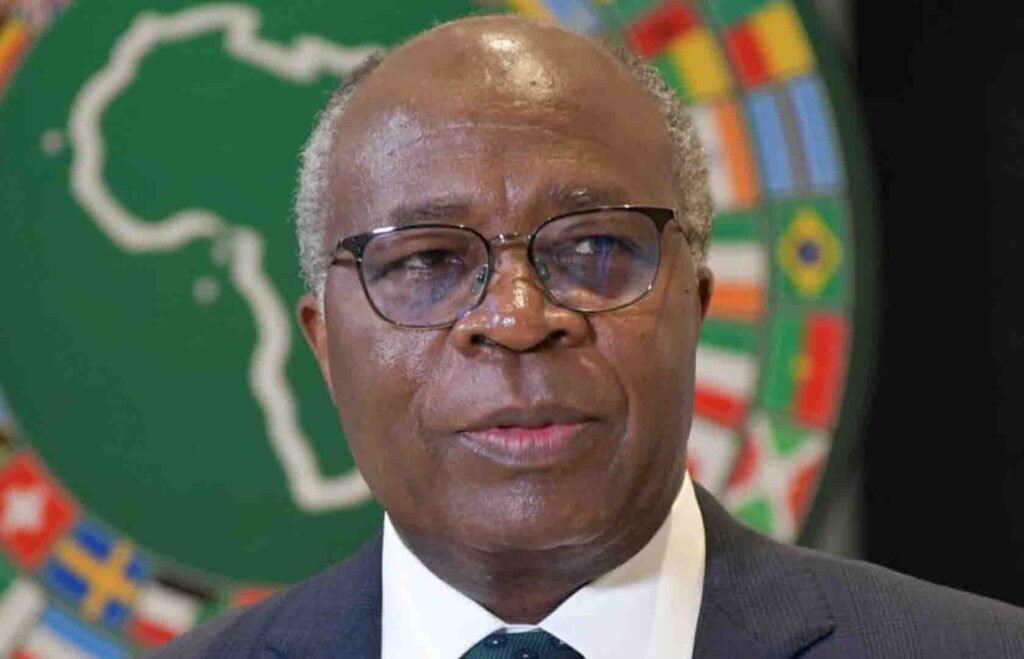

Minister of Finance and National Planning says Zambia must sustain economic growth of 6 to 7 percent annually if it is to achieve meaningful poverty reduction and create tangible improvements in living standards.
Dr. Situmbeko Musokotwane said following the restoration of macroeconomic stability, government’s immediate focus is to drive strong and sustained economic expansion.
Officiating at the joint FNB Zambia and American Chamber of Commerce in Zambia (AmCham) Economic Review Breakfast in Lusaka, Dr. Musokotwane cautioned that modest growth rates would not significantly reduce poverty due to Zambia’s population growth, currently estimated at about 2.6 percent per annum.
“If the growth in the economy is only 3 percent or 3.2 percent, you will not feel that you are making progress because that growth is just absorbed by the more mouths that must be fed. Growth must be a permanent feature that must be part of our society, it must be sustained over many years to have a real impact,” Dr. Musokotwane remarked.
The Minister stressed that while debt restructuring, macroeconomic stability and structural reforms are now largely under control, the next phase is anchored on accelerating growth.
He emphasized that for Zambia to achieve visible and tangible improvements, it must benchmark itself against nations that were once poorer but are now prosperous.
“We must aspire to be like Mauritius, Malaysia, Indonesia and those other countries that were once poorer than us but who are today prosperous. That is what we must aspire for. Even copper-producing countries like Chile have achieved high living standards through effective resource management and sustained growth,” he said.
He thanked the American business community for its continued engagement, describing the private sector as a key ally in the fight against poverty.
Dr. Musokotwane also expressed gratitude to cooperating partners including the International Monetary Fund, World Bank, and African Development Bank for their support in stabilizing the economy, noting that Zambia’s economic situation in 2026 is markedly different from that of 2021.
Speaking earlier, AmCham Board Chairperson Mkomela Muneku, called for greater policy predictability, structural competitiveness, and continued reform momentum as Zambia navigates a pivotal economic moment.
Ms. Muneku noted that macroeconomic shifts are directly shaping business confidence, citing international and local developments — including the IMF board’s approval of the final review of Zambia’s lending program unlocking US$190 million, copper prices topping US$13,000 per metric ton, and Bank of Zambia’s recent monetary policy rate cut to 13.5 percent.
“Businesses do not operate in policy theory alone, they operate in environments shaped by interest rates, exchange rates, fiscal policy, and regulatory predictability — and that is why today’s conversation is extremely important. Bank of Zambia has maintained a firm monetary stance aimed at containing inflationary pressures and stabilizing the currency. Investor interest is growing in mining, energy transition, and value-added manufacturing,” she noted.
Meanwhile, FNB Zambia Head of Corporate and Investment Banking, Luyanga Mufungulwa noted that U.S interest in the country’s critical minerals, energy transition, and supply chain diversification is reshaping investment flows.
“Our partnership with AmCham is a long‑term commitment to deepening the commercial, investment, and financial linkages between Zambia and the United States,” Mr. Mufungulwa added.
The FNB-AmCham Economic Outlook 2026 event, brought together senior business leaders, policymakers, and global partners to discuss the evolving landscape of Zambia–United States economic relations.