

Common Market for Eastern and Southern Africa (COMESA) has called for accelerated digital transformation across the region, describing it as the most critical driver of future economic growth and integration.
COMESA Secretary General Chileshe Kapwepwe noted that with a combined Gross Domestic Product (GDP) exceeding US$1 trillion and a population of about 680 million people, the bloc has the demographic and economic strength to lead Africa’s digital transformation agenda.
Ms. Kapwepwe highlighted the US$2.5 billion COMESA–World Bank Digital Acceleration Programme, launched earlier this year, which aims to connect 180 million citizens and extend digital public services to at least 100 million people by 2030.
She noted that the initiative prioritizes access for women, youth, refugees, businesses, and public institutions, bridging infrastructure gaps and aligning broadband, cloud, smart border, and digital payment strategies.
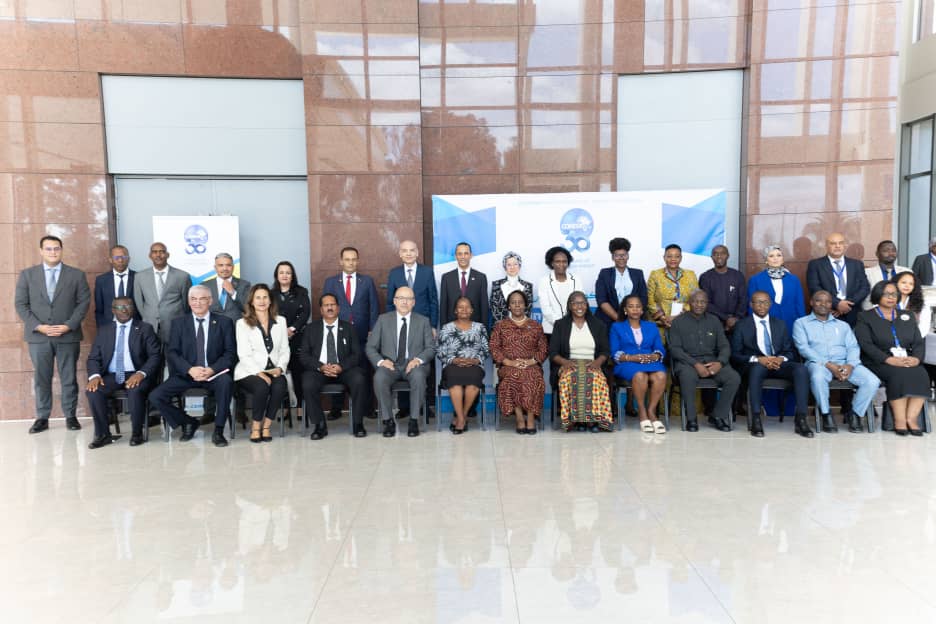
Speaking during the official opening of the 46th Intergovernmental Committee (IGC) Meeting in Lusaka, held under the theme “Leveraging Digitalization to Deepen Regional Value Chains for Sustainable and Inclusive Growth,” Ms. Kapwepwe said digital technologies offer unprecedented opportunities to address long-standing integration challenges.
She emphasized that projects such as the COMESA Digital Retail Payment Platform—now piloted in eight member states, Electronic Certificates of Origin, Smart Border Posts, and Virtual Trade Facilitation Systems are already reducing non-tariff barriers, cutting trade costs and simplifying processes.
She also highlighted the Africa Cloud Ecosystem, which is expected to deliver affordable and reliable cloud services for agriculture, health, education, and other key sectors.
Ms. Kapwepwe urged member states to speed up the ratification of regional instruments, harmonize policies, and close digital gaps that continue to slow progress.
Officiating at the event, Zambia’s Minister of Commerce, Trade and Industry Chipoka Mulenga stressed the need for stronger alignment between regional commitments and national development plans.
In a speech delivered on his behalf by Ministry of Commerce Permanent Secretary Lillian Bwalya, Mr. Mulenga said that capacity-building, improved financing, and timely domestication of regional instruments were critical to advancing digital-led development.
He further underscored the importance of the Tripartite Free Trade Area (TFTA)—a joint initiative by COMESA, EAC, and SADC—which entered into force in July 2024, noting that the TFTA provides a major platform to harness digital tools for market integration, industrial development, and improved cross-border infrastructure.
“The Tripartite Arrangement will help our region to further promote economies of scale, enable competitiveness and diversification, address supply-side constraints. Together, we should be able to enhance knowledge sharing, foster regional value chains and intraregional trade and investment,” Mr. Mulenga added.
The Minister called on Member States that have not yet ratified the TFTA to do so without delay, allowing the three regional blocs to advance integrated development planning and mobilize resources more effectively.
The 46th Intergovernmental Committee Meeting is reviewing the 2021–2025 Medium Term Strategy and considering the draft 2026–2030 Medium Term Strategic Plan, which places strong focus on digital tools, frontier technologies, and modernized trade facilitation systems. It is being held ahead of the COMESA Council of Ministers scheduled for December 4, 2025.


