By Cecilia Chiluba
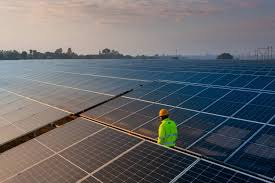
As Southern Africa grapples with climate-driven power shortages and growing electricity demand, Copperbelt Energy Corporation (CEC) is preparing to commission what will become the largest solar power plant in Zambia, marking a major milestone in the country’s transition toward a more diversified energy mix.
The 136-megawatt facility in Kitwe is nearing completion and will significantly expand Zambia’s renewable energy capacity once it comes online.
Once operational, the new solar power plant will significantly increase CEC’s renewable generation capacity from the current 94 megawatts to approximately 230 megawatts. The project is aimed at strengthening the country’s renewable energy capacity and supporting regional electricity trade.
Speaking during the 66th Southern African Power Pool (SAPP) Management Committee Meeting in Lusaka, CEC Head of Business Development and Power Trading, Eng. Bwalya Mulenga said the project forms part of the Corporation’s broader strategy to diversify energy sources and improve resilience in the face of climate-related power challenges.
“We are currently in the final stages of completing our third solar power plant in Kitwe, a 136-megawatt facility which, once commissioned, will be the largest solar plant in Zambia,” Eng. Mulenga said.
Eng. Muelnga stated that the project will help stabilize electricity supply in both Zambia and the wider Southern African region.
The development comes at a time when countries across Southern Africa are facing increasingly unpredictable rainfall patterns that have affected hydropower production, the dominant source of electricity in the region.
Over the past several days, energy leaders and utilities have been meeting under the SAPP platform to discuss strategies for addressing these climate-induced challenges.
He said the discussions highlighted the importance of regional cooperation in ensuring energy security.
“Over the past three days, member countries of the Southern African Power Pool have been deliberating on how our region can better respond to climate-induced energy challenges which in recent years have become increasingly evident across the region,” he stated.
According to Eng. Mulenga, strengthening regional cooperation remains key to building resilient power systems capable of meeting growing electricity demand.
“The resilience of our power systems will depend not only on national actions but on how effectively we work together as a region,” Eng. Mulenga stressed.
The project forms part of a broader strategy by CEC to expand renewable generation while supporting the stability of the regional electricity market.
Through its subsidiary CEC Renewables, the company is also investing in battery energy storage systems to help stabilize renewable energy output and improve grid reliability.
““This will enhance the reliability of renewable power, support grid stability and enable us to better serve both local customers and the regional power market,” he noted.
Beyond generation, CEC has also played a major role in strengthening cross-border electricity transmission in the region. The company has invested heavily in expanding the capacity of the Zambia–Democratic Republic of Congo Interconnector, which links Zambia and the Democratic Republic of the Congo.
“Over the past three years, CEC has played a pivotal role in strengthening cross-border electricity flows between Zambia and the Democratic Republic of Congo through the Zambia-DRC interconnector,” Eng. Mulenga remarked.
He added that the Corporation has worked with partners to expand transfer capacity on the corridor from 210 megawatts to 395 megawatts, improving power reliability for customers in both countries, while enhancing the efficiency of the regional grid, adding that such infrastructure is vital for the functioning of the Southern African electricity market.
Eng. Mulenga also welcomed ongoing regional infrastructure projects, including the planned Zambia–Tanzania Interconnector, which is expected to strengthen electricity trade between Southern and Eastern Africa.
Meanwhile, Energy Expert Bornface Zulu, described the near-completion of CEC’s 136-megawatt solar power plant as a significant milestone for Zambia’s energy sector, citing its role in diversifying electricity generation and strengthening investor confidence.
Eng. Zulu told Money News in an exclusive interview that the project reflects progress in reducing the country’s reliance on hydroelectric power and advancing toward a more diversified energy mix.
“Firstly, it shows that Zambia is moving in the right direction with regards to diversifying the electricity sub-sector, which is very important,” Zulu said. “It also puts Zambia on the world stage as one of the countries pioneering solar energy to ensure that we reduce our carbon footprint.”
He noted that the project sends a strong signal to investors about opportunities within the energy sector, particularly as it is being driven by the private sector.
“It sends a clear indication to both local and foreign investors that are willing to invest within Zambia’s energy sector, considering the fact that this is a private project,” he said. “It will give the confidence needed for more investment within the electricity sub-sector.”
“It is a good indicator for the general public that even the private sector is playing a key role in ensuring energy security for the country by engaging in solar energy,” he said.
According to Eng. Zulu, the plant will contribute additional power to the national grid, once operational, helping to increase overall generation capacity.
Zambia has been accelerating efforts to expand renewable energy sources, particularly solar, as part of broader strategies to enhance energy security and mitigate the impact of climate variability on hydropower generation.
As the country continues to pursue energy security and economic growth, projects such as the CEC solar plant illustrate the scale of investment required to power the region’s future.