

Securities and Exchange Commission (SEC) says it is keen to expand Zambia’s green bond and sustainable finance market by encouraging the introduction of more investment products to provide investors with wider investment opportunities.
SEC Director- Market Operations, Nonde Sichilima said the Commission is prioritizing sustainable development as part of its efforts to deepen the capital markets and support the country’s long-term economic growth.
Speaking during a media briefing on capital markets performance for the third quarter of 2026, Mr. Sichilima stated that the registration of Zanaco’s US$100 million sustainability bond during the quarter was a significant development.
He said the Commission was looking forward to seeing the bond raise the targeted capital, noting that strong investor demand would demonstrate growing confidence in Zambia’s capital markets.
“One of the things that we want to focus on is sustainable development, so during the quarter, you will recall that Zanaco Bank Plc registered a sustainable bond programme of up to US$100 million, providing for green and social notes. This is a programme registration, not a statement that the full amount has been raised. Cumulative green bond issuance reported under the Capital Markets Master Plan stood at approximately US$150.27 million,” Mr. Sichilima said.
Mr. Sichilima expressed optimism that Zanaco’s sustainability bond would attract strong demand, similar to the green bond issued by Copperbelt Energy Corporation (CEC), which was oversubscribed.
He stressed that oversubscription of such instruments would demonstrate investor confidence in the country’s capital markets and strengthen Zambia’s position as an investment destination.
“The reason for that oversubscription means that there is demand for securities, and it also means that there is a lot of confidence for the capital markets in Zambia,” he added.
Mr. Sichilima said the development of sustainable finance instruments remained important in mobilizing long-term financing to support economic development.
“Work continued on the Zambia Green Finance Taxonomy Guidance Note and revisions to the Green Bond Guidelines. The SEC and Chemonics Egypt also launched the Zambia Sustainable Energy Enterprise Scale-Up Programme; 14 of 17 applications were eligible and undergoing scoring,” Mr. Nonde said.
He noted that the corporate debt market closed the third quarter of 2026 at K4.2 billion, with a significant portion comprising CEC’s renewable energy green bond issued about two years ago.
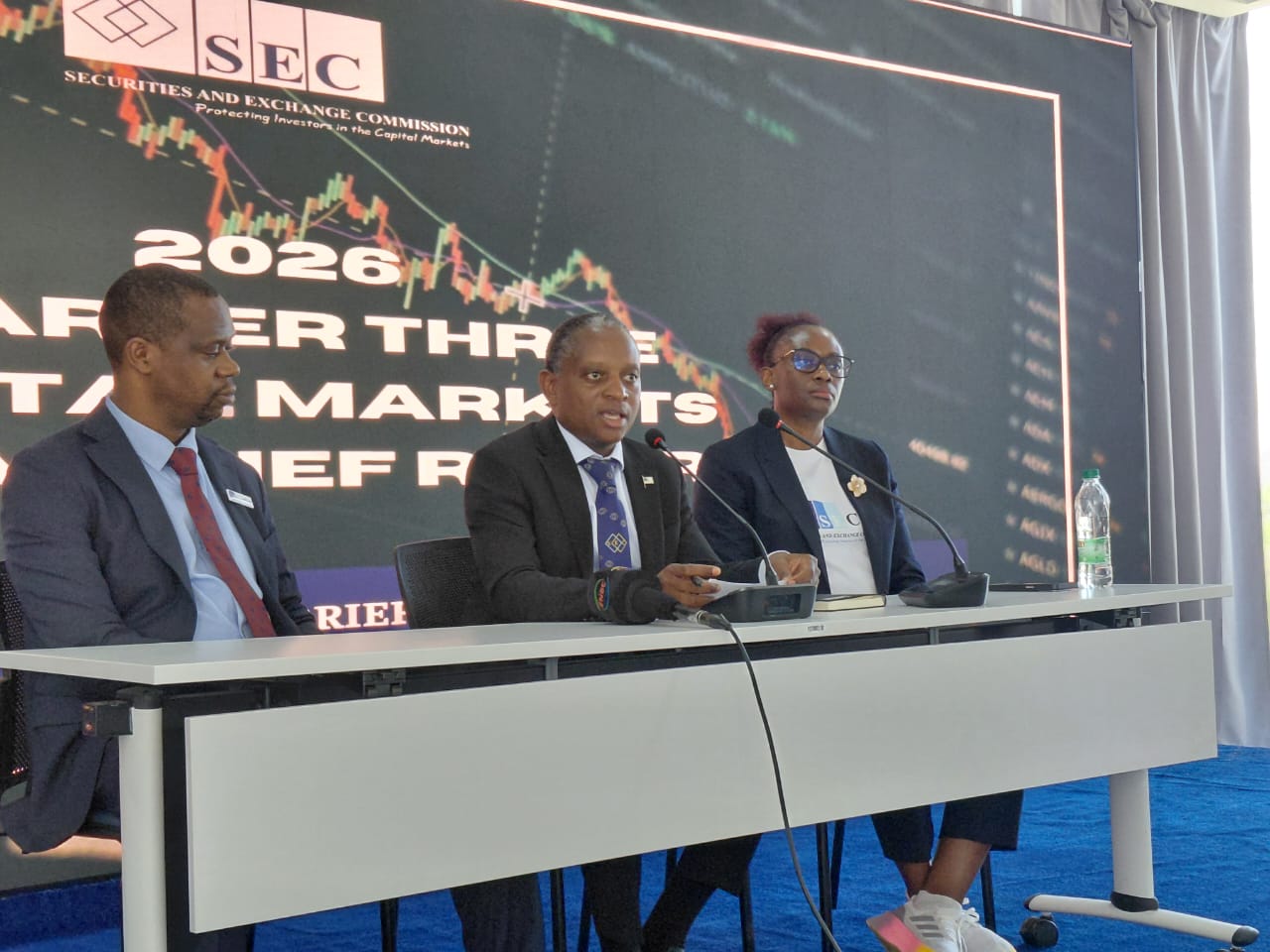
Meanwhile, Mr. Sichilima revealed that the number of investors in Zambia’s capital markets increased by over 300,000 in the third quarter of 2026, bringing the total number of investors to 1.8 million by the end of September.
He noted that the growth demonstrates the increasing participation of ordinary citizens in investment opportunities available through the capital markets.
“Collective investment schemes (CIS) investor numbers rose by 307,249 to 1,841,358, representing growth of 20.03%. This demonstrates continued interest in regulated collective investment products and reinforces the importance of accessible investor education,” he noted.
He attributed the performance to the resilience of the capital markets despite various domestic and global developments that affected the country’s economic environment.
Mr. Sichilma observed that easing inflationary pressures, declining interest rates and relatively stable foreign exchange rates had contributed to the economic conditions influencing capital market performance.
He added that the Commission remains focused on investor protection and market development, while pursuing initiatives aimed at providing more investment opportunities to the public
