By Bumi Pandwe
Emerald and Semi-Precious Stones Mining Association (ESMAZ) has warned that Government’s plan to increase mining licence fees for locally owned firms by more than three times in 2027 could push small-scale Zambian miners out of the sector.
Government has proposed the increase in the 2027 National Budget as part of efforts to raise more revenue from copper production and achieve its target of increasing output to 3 million tonnes by 2031.
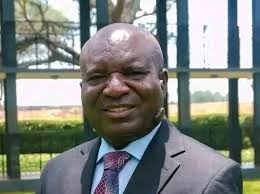
Speaking in an interview with Money News, ESMAZ President Victor Kalesha said while the proposed increase may generate more revenue for Government, it risks reducing the number of Zambian players participating in the mining sector.
“From my perspective, to increase copper production to 3 million tonnes by 2031 takes much more than just increasing the licence fees. It entails that we need more players that would be able to participate in mining and contribute to the attainment of 3 million tonnes,” he stated.
Mr. Kalesha acknowledged that the proposed increase in licence fees under the 2027 budget would boost Government revenue but warned that it could disadvantage small-scale miners.
“But if we increase the fees, as we have seen in the 2027 Budget that licence fees will be increased, yes of course there will be an increase in terms of revenue. But increasing the fees only means that we are pushing away the major stakeholders, who are the small-scale miners,” Mr. Kalesha added.
“If we leave it at increased fees, it means we will have more players of foreign origin, who also have their own ways and means of wanting to declare, maybe not truthful declaration.”
He called on Government to adopt a flexible approach to issuing artisanal and small-scale mining licences by introducing affordable fees that would encourage more local participation.
“So I feel that, as President of the Emerald Association of Zambia, I would like to see to it that Government is flexible in the issuance of artisanal and small-scale licences, small-scale licences with affordable fees that will bring a win-win situation, with more players in the playing field,” he said.
He stressed that making mining licences affordable would attract more local players and increase their contribution towards achieving the country’s copper production ambitions.
Mr Kalesha added that achieving the 3 million-tonne target would require an inclusive approach that allows miners at all levels to contribute to national production.
“We have to play it from the lowest to the highest. Everyone contributing,” Mr. Kalesha emphasized.