By Edina Nyirenda
Government has called for increased mineral value addition, skills development and stronger institutional capacity to ensure Zambia derives greater economic benefits from its mineral resources.
Minister of Mines and Minerals Development, Brenda Tambatamba, said the mining sector must move beyond mineral production and focus on value addition, capacity building and skills development to contribute to broader economic growth.
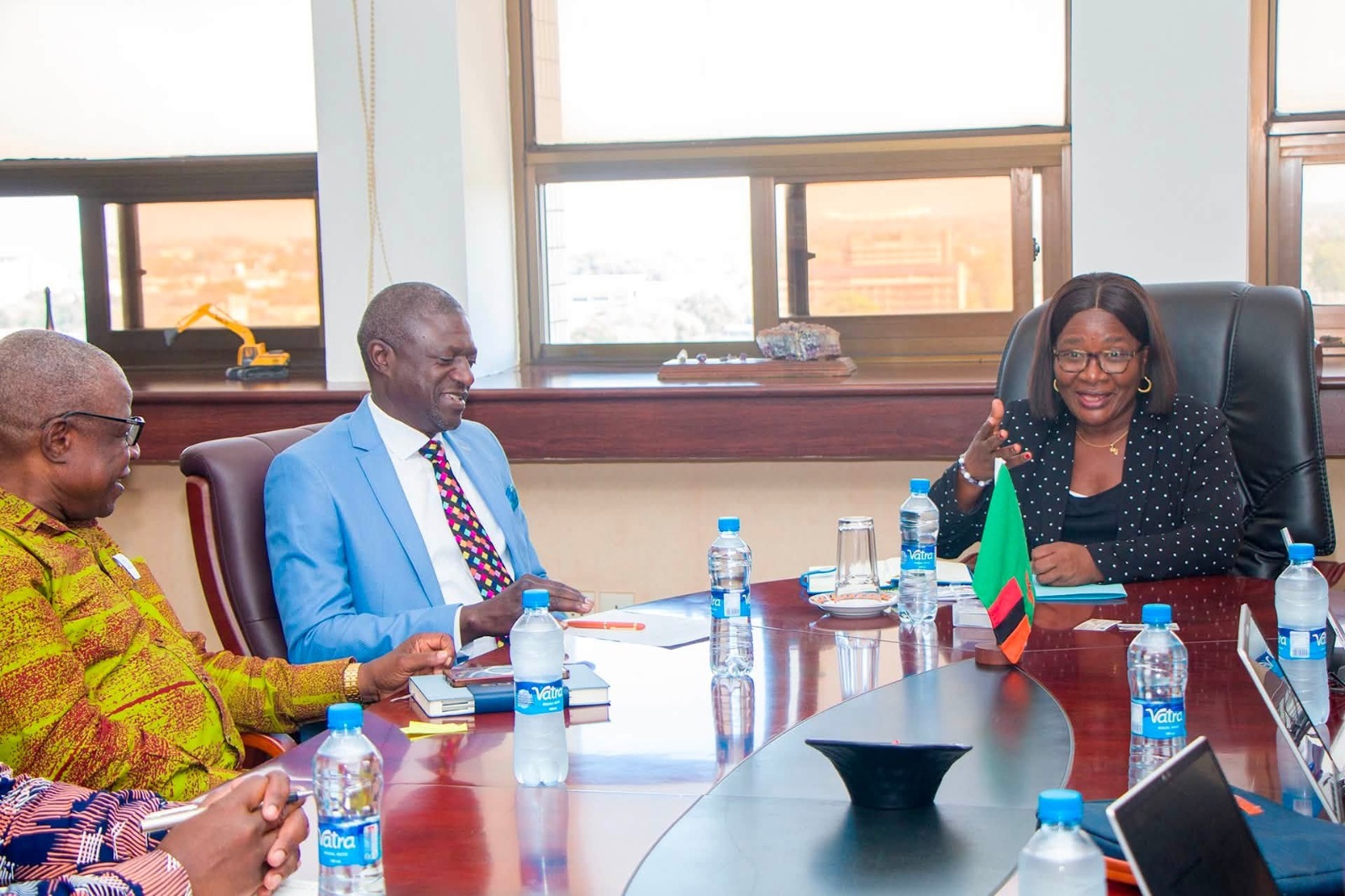
Speaking during a courtesy call by International Growth Centre (IGC) Country Director Victoria Kwakwa, Ms. Tambatamba said strengthening institutional capacity was critical to sustaining the country’s mining development agenda.
“We need to ensure that Government officials are equipped with the necessary skills and knowledge to implement and sustain the country’s mining development agenda,” she stated.
She welcomed the IGC’s proposed research and capacity-building initiatives, describing them as timely and aligned with the Ministry’s priorities.
The Minister stated that the initiatives would help new entrants in the sector understand past achievements, build on existing institutional knowledge and acquire the skills required to advance the mining industry.
Meanwhile, Minister of Industry, Noel Nkhoma, called for an aggressive drive towards mineral value addition, saying increased local processing is essential for creating jobs and unlocking greater economic benefits from Zambia’s mineral wealth.
Mr. Nkhoma said the country should move beyond exporting raw minerals, particularly copper and gold, and invest in downstream processing industries.
“Local processing of minerals is critical if Zambia is to maximize the benefits from its natural resources and create more employment opportunities,” he added.
At the same meeting, Ministry of Mines and Minerals Development Permanent Secretary, Dr. Hapenga Kabeta, said mineral value addition requires a coordinated approach involving various Government ministries and institutions.
Dr. Kabeta explained that while the Ministry of Mines’ responsibility largely ends at mineral production, other ministries, particularly the Ministry responsible for Industry, play a crucial role in advancing processing and manufacturing activities.
He also called for a broader focus on developing regional and provincial economic corridors, including strengthening Special Economic Zones linked to mining and mineral processing.
And Dr. Kwakwa said mining remained a key pillar of the IGC’s strategy, with proposed research aimed at generating practical evidence to support Government decision-making.
“Research should focus on local content and domestic value addition, artisanal gold mining, critical minerals, mining taxation and revenue optimisation as well as data-driven policymaking,” Dr. Kwakwa stated.
She added that the proposed research areas were informed by previous engagements with the Ministry and were intended to address issues where research could have the greatest practical impact.