

Zambia and Malawi have signed a Memorandum of Understanding (MoU) aimed at facilitating bilateral trade, promoting industrial development, protecting consumers and the environment, and reducing technical barriers to trade between the two countries.
The agreement involving Zambia’s National Quality Institutions (NQIs) namely, the Zambia Metrology Agency (ZMA), Zambia Bureau of Standards (ZABS), Zambia Compulsory Standards Agency (ZCSA) and the Malawi Bureau of Standards (MBS), will facilitate cross-border trade by addressing technical barriers arising from differences in standards, testing, certification and measurement requirements.
The partnership is expected to lower the cost and time associated with product testing and certification, improve market access for businesses and strengthen the competitiveness of products from both countries within the Southern African Development Community (SADC) and wider African markets.
Officiating at the signing ceremony in Lusaka, Minister of Trade and Exports Dr. Caroline Katotobwe, said the partnership will enable products from both countries to access each other’s markets with fewer unnecessary obstacles while maintaining quality, safety and consumer protection requirements.
Dr. Katotobwe stated that the cooperation will particularly benefit farmers, manufacturers, exporters and small businesses through reduced compliance costs, improved market access and expanded trade opportunities.
“Our objective is to ensure that products from both countries access each other’s markets with fewer unnecessary obstacles, while maintaining the required standards of quality, safety and consumer protection,” Dr. Katotobwe said.
She urged the participating institutions to develop a clear, results-oriented action plan focusing on harmonization of standards, mutual recognition of testing, inspection and certification results, information sharing, capacity building and private sector engagement, stressing that the success of the agreement would depend on effective implementation.
“Let us move beyond commitments and translate this partnership into tangible economic opportunities for our businesses and citizens,” she emphasized.
At the same event, ZCSA Executive Director Gerald Chizinga said the agreement establishes cooperation in five complementary areas which include strengthening cooperation in standardization, conformity assessment and accreditation, metrology, training and capacity building, as well as information exchange.
Mr. Chizinga stressed that the agreement will promote the harmonization of national standards with regional and international requirements, while encouraging mutual recognition of product certification and testing results to avoid unnecessary duplication.
He said the MoU will also facilitate the exchange of technical expertise, joint research, staff training and regulatory information between the participating institutions. “The MOU will be reviewed every three years and where necessary to take into consideration emerging needs.
Speaking earlier, ZMA Executive Director Humphrey Nkobeni said the three Zambian institutions were committed to contributing their expertise to ensure the MoU delivers improved technical services, clearer compliance guidance and increased trading opportunities for businesses in both countries.
Mr. Nkobeni added that the partnership would build confidence in the quality of products traded between Zambia and Malawi, while protecting consumers and supporting businesses to access markets.
“Trade grows where trust grows, and trust depends on the quality which we can demonstrate and the measurements which we rely on,” he said.
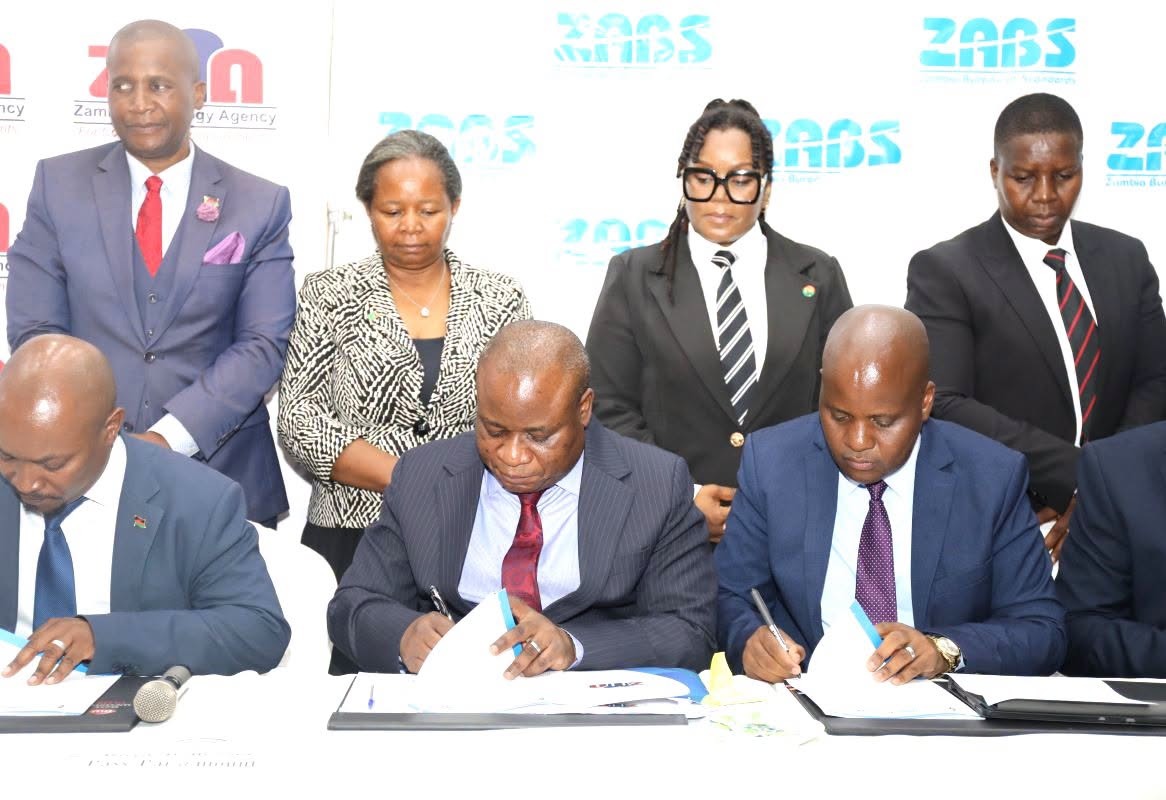
Meanwhile, ZABS Executive Director Nathan Sing’ambwa emphasized the need to eliminate duplication in product testing, certification and inspection to facilitate trade between the two countries.
Mr. Sing’ambwa noted that the current practice requires products exported from Malawi to Zambia to undergo testing and certification in both countries, resulting in unnecessary delays and increased costs for businesses, citing the previous rejection of Zambian cooking oil exports by Malawi due to differences in standards, which were later addressed through engagements between the two standards bodies.
“The agreement will allow the two countries to recognize each other’s conformity assessment results once the required standards have been harmonized, thereby reducing technical barriers to trade. The two countries will also identify the most traded products and harmonize the applicable standards to ensure that goods certified in one country are accepted in the other without undergoing unnecessary repeat testing,” he added.
Meanwhile, Malawi Bureau of Standards (MBS) Director General Simon Omandala, who was represented by Director of Metrology Services Dr. Steven Chalimba, called for sustained commitment and technical cooperation between the two countries to ensure the effective implementation of the MoU on standardization, metrology and conformity assessment. “We as NQIs, let us keep funding this MOU. Otherwise, it will remain on our shelves and it will benefit no one.”
He added that the ultimate objective was to ensure that products tested and certified in one country could be recognized and accepted in the other, subject to agreed standards and regulatory requirements. “If we cannot work together, it means we all lose.”
