

For 35-year-old Mervis Mulenga, a small grocery shop owner in Lusaka’s Chilenje Township, every day begins with calculating how much stock she needs, how much money she expects to make and whether her earnings will be sufficient to meet her business expenses.
Like many small business owners in Zambia, Mervis understands that running a business involves more than selling goods and making profits. It also requires managing operating costs, paying suppliers, meeting tax obligations and ensuring that customers can afford the products she offers.
However, from January 2027, businesses and consumers could face an additional tax adjustment following Government’s proposal to increase the standard Value Added Tax (VAT) rate from 16 percent to 16.5 percent.
Although the proposed increase represents just half a percentage point, its implications could extend across the economy, influencing business pricing, household expenditure and the cost of goods and services.
In presenting the 2027 National Budget to Parliament on November 6, 2026, Minister of Finance and National Planning, Dr. Situmbeko Musokotwane, proposed the VAT adjustment as part of Government’s broader strategy to strengthen domestic revenue mobilization.
The proposed measure is expected to contribute towards raising additional revenue to finance national development programmes while reducing reliance on borrowing and external financial support.
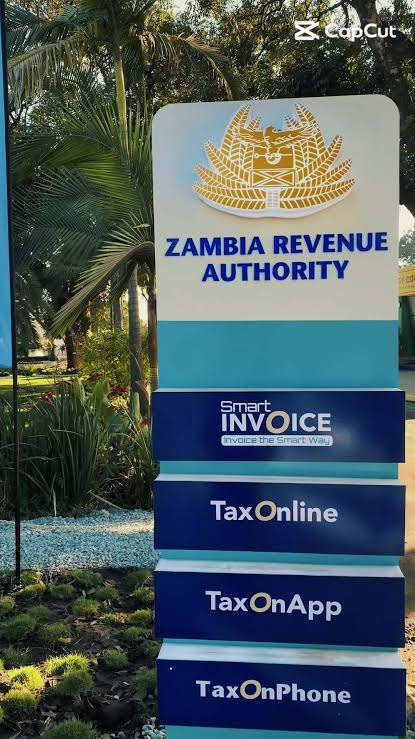
Value Added Tax (VAT) is a consumption tax imposed on the supply of goods and services. In simple terms, consumers pay VAT when purchasing taxable goods and services, while VAT-registered businesses collect the tax and remit it to the Zambia Revenue Authority (ZRA).
For instance, if a taxable product costs K100 before VAT, the current 16 percent rate adds K16, bringing the total price to K116.
Under the proposed 16.5 percent rate, the same product would attract K16.50 in VAT, bringing the total price to K116.50, assuming the underlying price remains unchanged.
This means a consumer would pay an additional 50 Ngwee on that particular K100 taxable item.
While the difference may appear insignificant when purchasing a single product, the impact could become more noticeable when households buy several taxable items or make larger purchases.
For Mervis, who regularly purchases stock for her grocery store, the proposed adjustment could influence the cost of taxable supplies and the prices she charges her customers.
However, the actual impact on businesses will depend on their VAT registration status, the nature of their transactions, applicable input tax deductions and how suppliers adjust their prices.
Government’s proposed VAT adjustment is largely driven by the need to increase domestic revenue and finance public expenditure.
The 2027 National Budget, amounting to K284.8 billion, places significant emphasis on mobilizing resources locally to support the country’s development priorities.
Government projects domestic revenue of approximately K233.7 billion, representing 82.1 percent of the total budget, with VAT expected to contribute about K44.31 billion. The revenue is expected to support key sectors such as education, health, infrastructure, agriculture and social protection.
By adjusting VAT, Government intends to expand revenue collection from consumption, providing additional resources to support public programmes. The proposed adjustment is also part of a wider package of tax and revenue measures expected to generate a net additional K10.8 billion.
From Government’s perspective, strengthening domestic revenue collection is important for improving fiscal sustainability and ensuring that Zambia can increasingly finance its development priorities using locally generated resources.
However, the proposal has also raised concerns about its potential implications for household budgets and the broader business environment.
Economist Kelvin Chisanga says Government must balance the proposed increase in VAT from 16 percent to 16.5 percent with measures that stimulate economic growth and protect household purchasing power.
For many Zambian families, particularly those already managing limited incomes, even relatively small increases in the cost of everyday purchases can create additional financial pressure.
Mr. Chisanga says while increased domestic revenue mobilization is important in financing Zambia’s 2027 National Budget, Government must ensure that taxation does not place an excessive burden on businesses and ordinary citizens.
“The key important aspect is not simply about how Government revenue gets to be collected, but how the leverage is collected as well and what implications it has for economic activities and the welfare of national citizens in this country,” he told Money News in an interview.
According to him, if businesses pass on the additional VAT cost to consumers, households could gradually experience increased expenditure on affected goods and services.
For small and medium-sized enterprises (SMEs) such as Mervis’ grocery shop, this creates a difficult balancing act.
Increasing prices could help businesses manage additional costs, but it could also discourage customers who are already struggling with the cost of living.
On the other hand, maintaining existing prices without carefully managing operating expenses could affect profit margins and business sustainability. This illustrates the delicate relationship between taxation, business sustainability and consumers’ purchasing power.
It is important to note that the proposed increase applies to standard-rated supplies, while zero-rated and exempt supplies are treated differently under the VAT system. The proposed adjustment also highlights the importance of tax compliance and proper financial management among businesses.
VAT-registered businesses will need to prepare for the new rate by reviewing their accounting systems, invoices, pricing structures and tax records once the measure is enacted. Businesses must also understand the difference between output VAT collected on sales and input VAT paid on eligible business purchases.
For small enterprises, particularly those operating with limited financial and administrative resources, understanding these obligations is essential to avoiding compliance challenges.
The Zambia Revenue Authority will therefore have an important role in educating taxpayers and ensuring that businesses understand how the proposed changes should be implemented.
While the proposed VAT increase presents an opportunity for Government to mobilize additional resources, its success will partly depend on how effectively the revenue is utilized.
For Economist Chisanga, the effectiveness of the revenue mobilization strategy should not only be measured by how much revenue Government collects, but also by its impact on economic activities and citizens’ welfare.
“The broader concern is the relationship between taxation and economic growth, which needs to be monitored and aggressively pursued,” he stated.
Taxpayers are more likely to appreciate their contribution when they can see tangible improvements in public services, infrastructure and economic opportunities.
Ordinary citizens such as Mathews Tembo, another SME operator based in Matero North in Lusaka, expect increased tax revenue to translate into better roads, improved health facilities, quality education and a stronger business environment.
Mathews is of the view that Government must strike a balance between raising sufficient revenue to finance development and ensuring that taxation does not place excessive pressure on households and businesses.
Ultimately, the proposed VAT adjustment is more than a change from 16 percent to 16.5 percent. It represents part of a broader conversation about how Zambia can finance its development ambitions while protecting household purchasing power and supporting the growth of local businesses.
For Mervis, Mathews and thousands of other small business owners across the country, the real test will be whether the additional tax burden is matched by an economic environment that allows businesses to grow, create employment and contribute meaningfully to national development.
As Zambia moves towards implementing its 2027 National Budget, the challenge will be ensuring that the drive for increased domestic revenue goes hand in hand with improved livelihoods and inclusive economic growth.
