National Pension Scheme Authority (NAPSA) says Zambia’s social security system must be strengthened to ensure that citizens have adequate financial protection when they retire or become unable to earn an income.
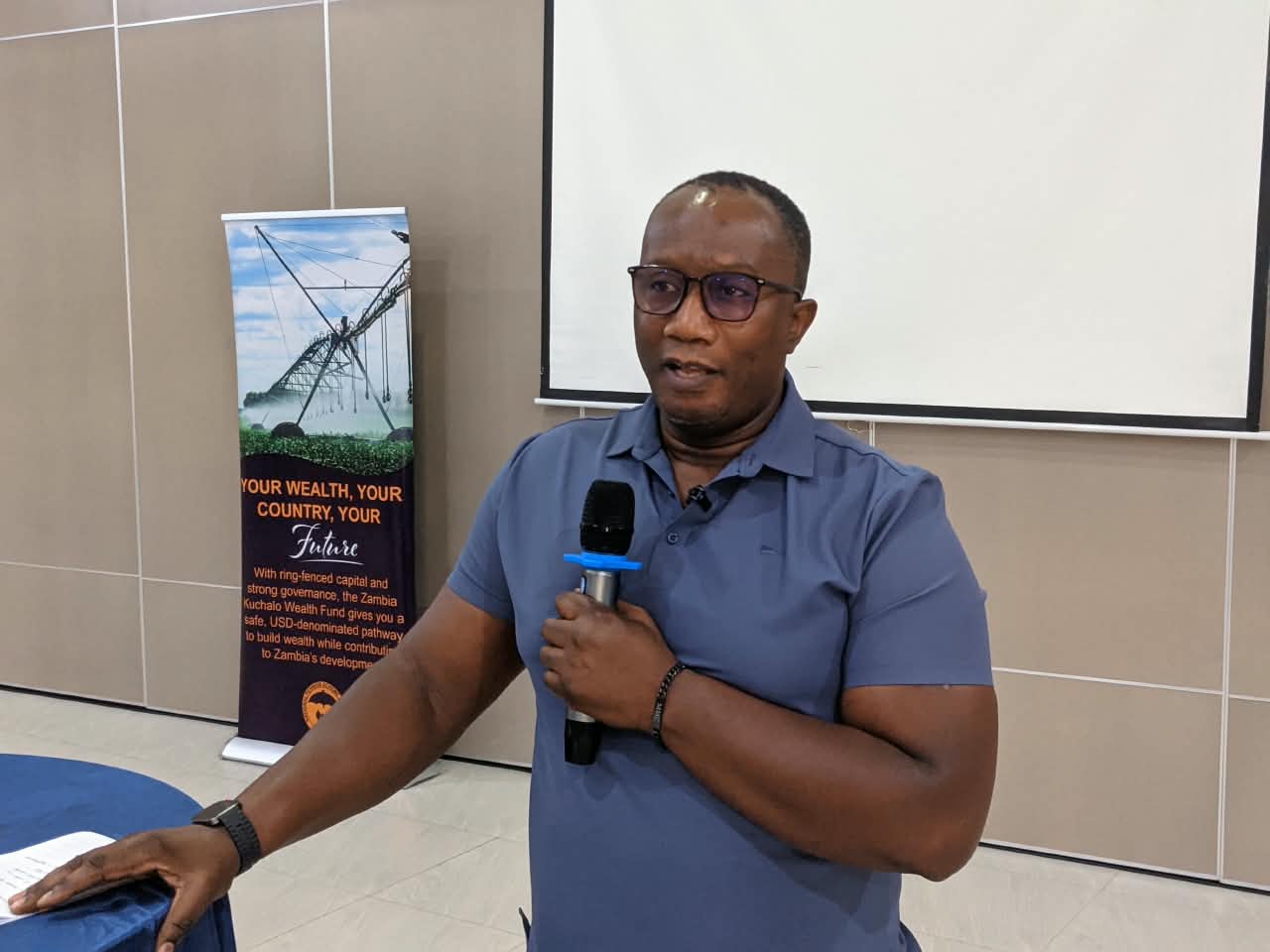
Addressing Journalists during a media training workshop in Siavonga, Authority Director General, Muyangwa Muyangwa said NAPSA should serve as the last bastion of financial defence for Zambians during times of vulnerability, particularly in old age.
“From my point of view, all that we are trying to do is ensure that when a Zambian needs assistance, who has been a member, we provide a facility to assist you in those times where, one, nature has taken its course,” Mr. Muyangwa said.
“As NAPSA, we should be that last bastion of financial defence that every Zambian, every Zambian, I emphasize every Zambian, will tend to in times of need.”
He stated that social security is intended to provide financial stability to people when they are no longer employed and unable to provide for their families through regular employment. “Basically, I’m talking about when you are no longer employed, to make sure that you have some financial stability during old age,” he stated.
Mr. Muyangwa stressed that while Zambia has several institutions contributing to the broader social protection system, NAPSA has a specific role in supporting citizens when they become vulnerable.
He, however, noted that NAPSA has increasingly become the first point of call for citizens seeking financial assistance, saying this presents an opportunity for further reforms.
Mr. Muyangwa said the 2026 social security reforms have addressed some aspects of the pension system, but the contribution rate remains at 10 percent.
He emphasized that there is, therefore, need for broader discussion on the contribution rate if beneficiaries expect to receive more from the scheme.
“So if the owners of the fund are asking for more, but the contribution rate has not changed, it means we have a small elephant in the room, we need to start talking about it. It’s called the contribution rate,” Mr. Muyangwa stressed.
Mr. Muyangwa explained that the amount accumulated by a member depends on three key factors—how long they save, how much they contribute and the rate at which their contributions grow.
“First of all is the length of the period over which you have been saving. Secondly is how much you have been saving, which is basically the contribution rate, and the last one is an internal factor which says those contributions, at what pace are they growing?” he explained.
He further said NAPSA intends to benchmark its service delivery against the private sector as expectations from members continue to increase. “The owners of the scheme want more and therefore we want to benchmark ourselves with the private sector,” Muyangwa said.
He stated that this requires a mindset change within NAPSA, particularly as the institution moves into areas such as savings mobilization following the recent reforms.
“There has to be a mindset change given for ourselves within NAPSA and to achieve that we have to start behaving like private sector in more sense than one,” he stressed.
The NAPSA Director General also stressed the importance of transparency and making information readily accessible to Journalists and the public as part of improving accountability and service delivery.