

Zambia Revenue Authority (ZRA) says increasing tax compliance by at least 10 percentage points is critical to meeting its 2026 revenue target and closing the country’s projected 2 to 4 percent of Gross Domestic Product (GDP) revenue gap without raising tax rates.
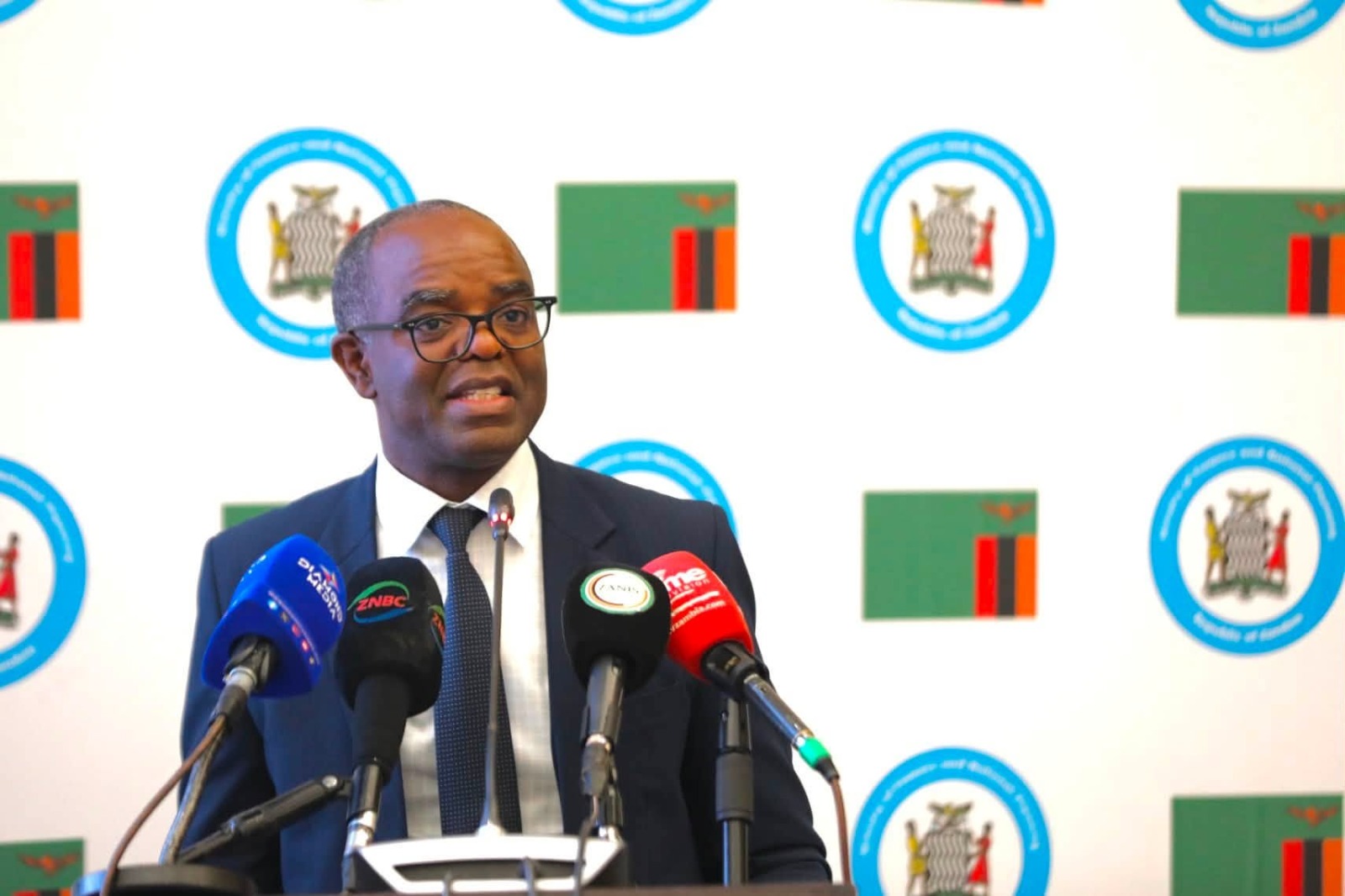
ZRA Commissioner General Dingani Banda said average tax compliance has improved from 42 percent in 2024 to 49 percent in 2025, reaching 52 percent between January and July 2026.
Speaking during public consultations on the 2027–2031 Medium-Term Revenue Strategy (MTRS) in Lusaka, Mr. Banda stated that ZRA’s current level of compliance is projected to result in actual collections of about K169.6 billion.
“This means we need to increase our compliance rates by at least 10 percentage points to meet the 2026 target,” Mr. Banda said.
He noted that improving compliance by 5, 10 and 20 percent could raise projected actual collections to K178.1 billion, K186.6 billion and K203.6 billion, respectively. “If we consistently improve compliance rates, the 2 to 4 percent of GDP revenue gap projected in the MTRS can be closed without increasing tax rates,” he added.
Mr. Banda said ZRA is implementing reforms aimed at improving compliance, including the electronic Tax Clearance Certificate (eTCC), nudging and the planned piloting of pre-filling of tax returns in September 2026.
He stressed that the Authority has also identified several compliance gaps, particularly in Value Added Tax (VAT), where revenue leakages arise from under-declarations, fraudulent input VAT claims and a structural VAT gap.
Mr. Banda further cited the historical VAT refunds backlog, fragmented customs controls, limited data sharing and enforcement capacity, as well as the growth of informal economic activities, tax evasion, profit shifting and illicit financial flows as factors affecting domestic revenue mobilization.
“Revenue leakages result from under declarations, fraudulent input VAT claims and an observed VAT structural gap,” Mr. Banda snoted.
Meanwhile, the Commissioner General reported that ZRA’s net revenue collections have increased significantly, rising from K83.9 billion in 2021 to K160.6 billion in 2025, with growth accelerating to 30.1 percent in 2024 before moderating to 22.7 percent in 2025.
He said the Authority’s revenue target has also increased from K58.7 billion in 2020 to K185 billion in 2026, representing growth of 215.2 percent, while ZRA’s contribution to the national budget is projected to reach 73.1 percent this year, compared to 55.7 percent in 2020.
Mr. Banda stated that the Authority is also leveraging technology to strengthen compliance through the Smart Invoice System.
As of August 30, 2026, 48,178 taxpayers had registered on the system, with 22,919, representing 91.05 percent of the active VAT taxpayer population, registered.
He revealed that the system has so far transmitted 292 million invoices valued at K4.4 trillion. “Smart Invoice enables real-time sales-and-purchase matching to flag anomalies,” he stated.
Mr. Banda further said the data is being used to profile taxpayers and identify discrepancies, anomalous transactions, under-reporting and high-risk taxpayers for targeted audits, as part of efforts to mobilize domestic resources sustainably and support national development under the 2027–2031 MTRS.
